The Healing Power of Food: Andrea Sprague on Nutrition, Wellness and Flavor
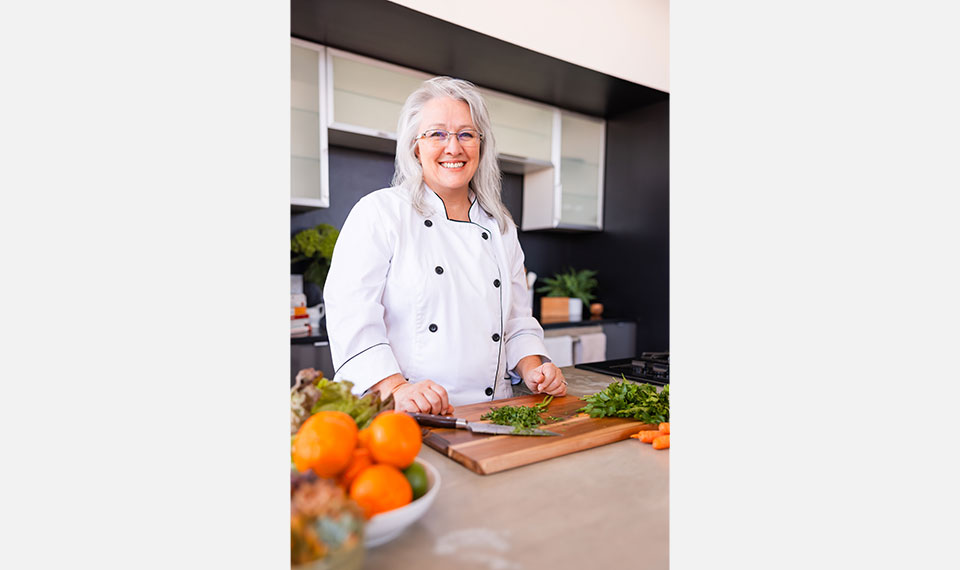
Can you tell us about your work in nutrition consulting at The Pickled Beet?
AS: I assist with the more complex clients for The Pickled Beet. These clients have signed up for their meal delivery service and have more specific dietary needs than the average customer. They are managing a health crisis or diagnosis, or recovering from surgery and their meal planning needs special considerations. I combine the clients’ needs and preferences with my knowledge of healing foods and craft a weekly menu that supports their health and manages their symptoms.
Some clients come with a specific list of foods they want and don’t want, and guidelines from their health professionals. Other clients may be at the beginning of their journey and not sure what they need, which is where I can fill in the gap with my nutrition and healing diets experience.
Q: How did your background as a Nutritional Therapy Practitioner and Professional Chef prepare you for your role at The Pickled Beet?
AS: My background is the perfect combination of skills for this role! As a chef with extensive experience cooking for people with food allergies and health challenges, I know how to make healthy meals taste good and be well balanced. So, as I create recipes and menus for clients, I am paying close attention to creating menus that are just as satisfying and delicious as the ones that don’t have dietary restrictions.
And as a Nutritional Therapy Practitioner, I add that food as medicine touch, which is why the meals are not only balanced in flavor, but they are also health supportive.
As a chef I also understand what is happening in the kitchen when the Pickled Beet chefs are preparing meals for all their clients. I can help to make the menus I create work well with their overall workflow.
Q: Can you tell us more about using food as medicine?
AS: For me, using food as medicine means recognizing that what we eat can be an important part of supporting the body, particularly when someone is dealing with a health challenge. It doesn't mean that food replaces medical treatment or that one particular food can cure a disease. It means using nutrition intentionally to give the body the nourishment and support it needs while also removing foods that may be aggravating symptoms or interfering with someone's well-being. Food can be a valuable tool when managing health conditions and symptoms. It’s one thing to take medication for a symptom, but what if you combine that with also adding in foods that support the body or take away foods that create more inflammation.
Q: What advice would you give to women looking to become Nutritional Therapists or Professional Chefs?
AS: Take a risk and go for what you want, while also researching your options and create some safety while you leap. I had an office job when the passion to work with food and attend culinary school came to me. I had security and a career I really enjoyed for a very good company. But my interest was growing in the field of food and nutrition. So, I started taking nutrition classes on the weekends while still working full time, but it only fueled my interest to learn more. It took me three years to finally decide to quit my job and move to NYC and attend culinary school full time.
You don’t have to quit your job or career to make a change like this. You can find many trainings and certifications that can be done part-time if that is what you need to do. Going to school full time was the right decision for me at the time, and I had some financial resources to depend on while I wasn’t working full time. I think the important thing is to find the path that makes sense for your circumstances while still moving yourself toward the career you want.
I also suggest that you consider how you want to use your skills as a chef or nutritionist. How do you want to help people? In what setting do you want to work with clients? Do you want to work one-on-one, teach classes, develop recipes, work in healthcare, work with families, or build your own business? There are so many possibilities now that you don't necessarily have to fit yourself into a traditional job description.
Look for role models who are doing things that inspire you and pay attention to what you like about their work. Then use that information to help create your own path. You don't have to copy someone else's career—you can take pieces from different people and different experiences and build something that is uniquely yours.
And give yourself permission to evolve. You don't have to know exactly what your career will look like ten or twenty years from now. My own career has changed and expanded in ways I couldn't have predicted when I first decided to go to culinary school. Sometimes taking that first step opens a door to something you couldn't see from where you started.
Most importantly, don't wait until you have everything figured out. Start learning, start experimenting, talk to people who are doing the work, and take the next step that feels right for you. You can build the path as you go.
Q: What can our readers do right now to eat healthier and lower inflammation?
AS: The good news is that you don't have to completely overhaul your diet overnight to start eating in a way that supports a healthier inflammatory response. I would start with a few simple changes and build from there.
First, eat more whole foods. Fill your plate with colorful vegetables and fruits, quality protein and healthy fats. Think about what you can add to your diet rather than simply focusing on what you need to take away. The more variety of whole foods you eat, the more opportunities you give your body to receive the nutrients and phytonutrients it needs. The good foods you add will naturally crowd out the junk foods.
Reduce highly processed foods and added sugar. You don't have to be perfect, but if packaged and highly processed foods make up a large portion of your diet, start replacing some of them with foods that are closer to their natural form. Even small changes—swapping a sugary snack for berries and nuts or replacing a highly processed side dish with roasted vegetables—can add up.
Eat more foods that you have cooked at home yourself. The more you eat food that is freshly cooked and made by you or a service like Pickled Beet, the better you will feel. You will notice a change in how you feel because of the small differences between mass produced, prepackaged and restaurant meals and the foods you make at home. The quality of the oils the food was cooked in improves, the freshness of the ingredients, and the less fillers and preservatives involved. Those are powerful changes.
And finally, pay attention to your own body. There isn't one anti-inflammatory diet that works the same way for everyone. Notice how your body reacts to different foods. How your energy may change after certain meals. Your body will tell you exactly what it thinks of the foods you eat. You get feedback in the form of symptoms like digestive issues, headaches, joint discomfort, skin problems, or dips in your energy. This is the most valuable tool you can use when it comes to eating what’s healthy for your individual body.
Q: What is one word of advice you can offer to young women who want to reach your level of success?
AS: Courage and Trust
Have the courage to take a chance on yourself, even when you don't have the whole path figured out. My own career didn't unfold according to a perfectly mapped-out plan. I had to take risks, leave behind things that were comfortable, keep learning, and trust that I could figure out the next step.
Courage doesn't always mean making a huge, dramatic change. Sometimes it means taking the class, making the phone call, saying yes to an opportunity, trying something new, or admitting that the path you're on isn't the one you want anymore.
You don't have to know exactly where you're going. You just have to be willing to take the next step and trust that you will make the decisions that are right for you.
Q: Can you tell our audience one of your most memorable moments of your career?
AS: One of the most memorable moments of my career was getting the opportunity to work alongside a chef who had appeared on Top Chef. I had watched him on the show and was always inspired by his creativity and his fun, larger-than-life personality, so the opportunity to work with him was incredibly exciting.
The opportunity came about through a relationship I had been building with a local farm. They had hired this chef to create a special “Dinner in the Orchard” event, and when I heard about it from one of the farm’s staff members, I asked if there was a way I could get involved.
I ended up being part of the culinary staff for the dinner, but because of my existing relationship with the farm, I was also brought in to help with the preparation and became the primary point of communication with the chef leading up to the event. I was thrilled to be given that level of responsibility, and I learned so much from the experience—not just about cooking but about working on a large-scale culinary event and collaborating with a chef whose work I admired.
The dinner itself, surrounded by the orchard and featuring locally produced food, was a highlight of my career. But what made it especially memorable was how it came about. I hadn't set out looking for an opportunity to work with a Top Chef contestant. I was simply building relationships around something I was passionate about: local food.
It was a great reminder that you never know which relationships will open the door to an opportunity you never could have imagined. Sometimes the connections you build along the way become just as important as the skills you develop.
Q: At the start of your career, what do you wish you had known?
AS: I wish I had more experience around how to run a business. I started off with a passion for cooking healthy food, but I didn’t know much about marketing and sales and organizing my books. Most entrepreneurs start a business in the same way. We love what we do and we start a business doing it. I learned what I needed to know along the way and eventually hired a business coach which made me a much better business owner. I wish I had looked for those resources sooner.
Q: What advice would you give to young women who want to pursue their dream and start a business?
AS: Look for coaching and support. You may have a brilliant idea and all the passion in the world to make it happen, but you don’t have to figure out the business side by yourself.
In Utah, there is a Women’s Business Center, which is an incredible resource for women who are starting or growing a small business. They offer free coaching, business classes and access to resources that can help you understand everything from creating a business plan and marketing to finances and the practical steps of getting your business off the ground. Having access to that kind of support can really shorten the learning curve—and it’s free, which is especially valuable when you’re just starting out.
I encourage women to look for something similar in their own community. There may be a women’s business center, small business development organization, mentorship program, networking group, or local classes that you don’t even know about yet. Take advantage of those resources.
And reach out to someone who has created a business similar to what you want to create. Ask them if you can interview them, ask them how they got started, what they've learned. I get requests all the time from people who are thinking of going to culinary school or who have just graduated from the same nutrition program I attended. They want to know more about how I’ve structured my business.
Q: After high school, where did you feel your career path would take you?
AS: I was studying recreation therapy and human development in college. I was working in childcare and recreation at the time. I thought I was going to become a Recreational Therapist and create programs for individuals with disabilities and work with kids at outdoor summer camps. I loved working with groups on the ropes course at my college too. I thought I was going to be outdoors in hiking boots every day.
Then my life took a turn when my mom was diagnosed with cancer when I was 25. I needed to find full-time work that would help support our household, which led me to take an office job. Interestingly, I found a lot of joy and satisfaction in that career as well. It just looked very different from the path I had imagined for myself after high school.
My career path shifted again, as you already know, when I was diagnosed with food allergies in my 30’s. That experience changed the way I thought about food, health, and nutrition, and ultimately set me on the path to becoming a chef. Looking back, my career has taken some pretty unexpected turns, but each chapter has led me to the work I’m doing today.
Six Things About Andrea Sprague
1. What’s the most amazing adventure you’ve ever been on?
Years ago, my friend and I flew to Tahiti to meet up with her father who had sailed there from Hawaii. His crew had all left him after running through some races around the islands. It was a wonderful opportunity for us to have a week on this beautiful 60-foot sailboat and cruise around the Tahitian islands. It was also an opportunity for my friend and I to bring her father tools and snacks. We spent the week in luxury, sailing from island to island, but also lived quite rustic with no running showers or laundry. It was a dream trip for two young girls in our 20’s.
2. Among your friends, what are you best known for?
Naturally I am the cook in the group and always in charge of making sure we are fed. It’s the benefit and the curse of being a trained chef. Everyone leaves it to me, which is fine because I am naturally good at picking restaurants, or being in charge of meals when we are all together. My friends trust me for cooking advice too, when I tell them how to make a dish better.
3. What’s your favorite international food?
I love Thai food. The flavors are so complex and bright, and so different from American food. The combination of sweet, salty, sour, spicy, and savory. There’s so much depth and freshness in Thai cooking, and I love the use of herbs, aromatics and fresh vegetables. I also love the coconut milk that shows up in so many of their dishes. One of my favorite dishes is Tom Kha Gai, a smooth coconut milk soup base infused with lemongrass, galangal and lime leaves.
4. Are you a morning person or a night owl?
I am all about mornings. I have a dog who needs a walk every morning, so I can’t stay up late and just expect him to wait for me. And I love being outside the mornings while it is still cool and crisp and dark so that I can watch the sky slowly brighten while we walk. My brain tends to be way more alert in the mornings too, so I try not to fight it.
5. What’s your signature drink?
I am currently in Perimenopause, and alcohol does not work for me anymore. I’ve made it my mission to create drinks that are just as fun and enjoyable as something with alcohol in it. So when everyone around me is drinking, I don’t feel like I am missing out. I’ve really enjoyed creating tasty combinations other people want too. My current signature drink is a Mock Blue Hawaiian:
Ingredients
● 1 ½ cup freshly made lemonade
● 1 teaspoon blue spirulina powder (for the gorgeous blue color and antioxidant boost)
● ½ cup something fizzy (like Olipop Lemon Lime or Poppi Wild Berry)
● Couple drops of herbal calming support like Take the Edge Off from Apothekary
● Ice
● 2 thin slices of lemon and a mint sprig for garnish
Mix everything and pour into a glass with lots of ice and always add garnish to make it celebratory and attractive to look at!
6. Which of the five senses would you say is your strongest?
My sense of smell. I am the first to notice when something smells off in the fridge, or to notice something different in my environment. I smell the neighbor that is BBQing before anyone else in the house notices. It is valuable in my line of work, because I can tell if an ingredient has gone bad and needs to be tossed. When I am cooking and trying to decide what my dish needs, I can open my spice jars and smell them to decide if it should go in. It’s funny that in my house, my husband has the best hearing and notices sounds before I do (and he works in audio) and I have the best sense of smell (and I work in food). Seems perfect.